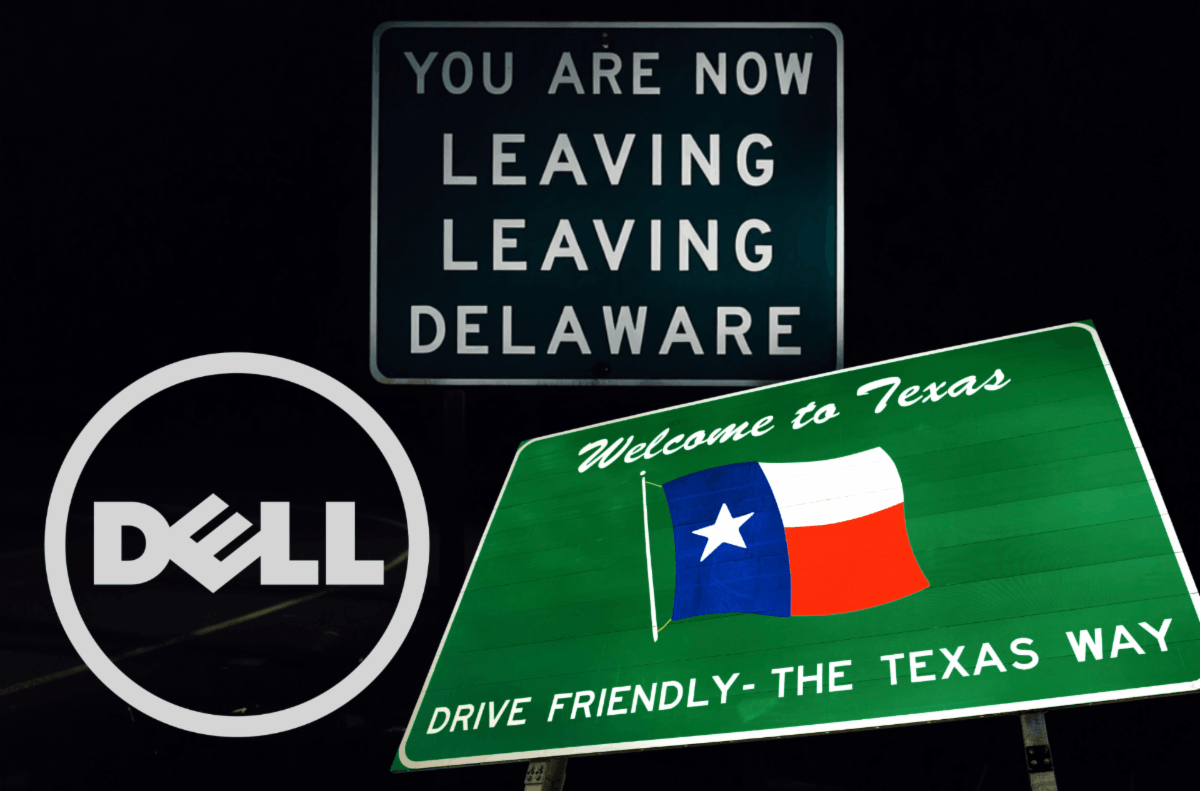
In the most recent instance of corporate flight from Delaware, sometimes referred to as “DExit,” Dell Technologies announced Monday that it is leaving the First State to reincorporate in Texas.
In a similar move reported several weeks ago by Newsmax, FirstCash Holdings, a $9 billion market cap company, also filed plans to reincorporate in Texas. Company officials said the action was driven by a desire for “more clarity and predictability” in legal matters, along with efforts to reduce “opportunistic and frivolous litigation.”
More than 60 public companies, with a combined market cap of over $3 trillion, have reportedly quit the state in the past two years alone.
Delaware’s legacy as the nation’s preeminent corporate home has reaped huge benefits for the state, providing more than a third of all state revenue through tax collections, fees, and the recovery of escheated (abandoned) property.
However, headline-grabbing corporate disputes, the perceived unpredictability of Delaware’s Chancery Court decisions, and tax measures passed by the General Assembly have led some major corporations, including Tesla, Meta, SpaceX, Coinbase, and Dropbox, to flee the state and incorporate in Texas and Nevada–two states that have aggressively been angling to tap into that profitable revenue stream.
In an opinion column published in March, Karen Harned, the former executive director of the National Federation of Independent Business Small Business Legal Center, wrote: “Delaware’s once-esteemed Court of Chancery is increasingly viewed by corporate leaders as unpredictable, with rulings that introduce uncertainty into routine business decisions and open the door for enterprising trial attorneys to file lucrative lawsuits. As corporations look to shift their legal home base, Texas and Nevada have made proactive legislative changes to attract corporate charters and convince businesses to put down new roots.”
A Newsmax article posted on Tuesday framed the corporate exodus in starker terms: “Corporate executives and analysts now argue that Delaware’s legal environment has become less predictable and more costly, especially as trial lawyers have donated heavily to the state’s Democratic political machine for influence. A primary concern is the rise in shareholder litigation, with companies citing what they describe as ‘opportunistic’ or ‘meritless’ lawsuits. These cases are often settled quickly to avoid prolonged legal battles, resulting in substantial fees for trial attorneys but limited benefits for shareholders. Judges in Delaware, in turn, often rule favorably for plaintiff law firms, only to leave the bench later for lucrative payouts from the same law firms they once oversaw.”
The Meyer administration has repeatedly dismissed DExit concerns.