After six weeks of budget hearings, state lawmakers return to work on Tuesday.
Ahead of the restart of the legislative session, lawmakers recently filed multiple new bills, including the following measures:
Removing Disincentive for Tips
House Bill 315 would prohibit charging transaction fees on tips made using credit cards.
Violations would be punishable with a penalty of $1,000 per transaction and return of the wrongfully charged fees.
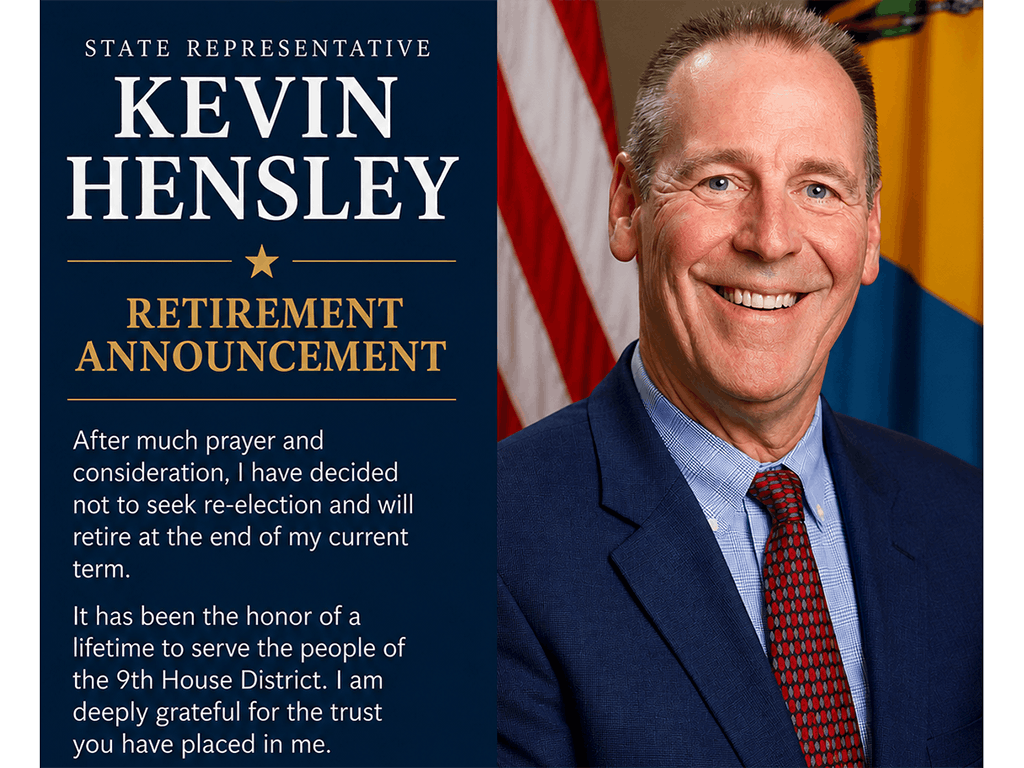
More than half of the General Assembly’s 62 legislators are sponsoring or co-sponsoring the measure, including five House Republicans: State Reps. Tim Dukes, Ron Gray, Kevin Hensley, Michael Smith, Jeff Spiegelman, and Jesse Vanderwende.
Barring Incentives for Data Center Construction
House Bill 310 would make most data centers ineligible for state tax credits or license fee reductions available to projects creating new jobs.
Under the bill, any proposed data center exceeding 30 MW of power consumption would not be able to claim the incentives.
Data centers have become an increasingly controversial topic because large-scale facilities can require vast amounts of electricity to operate. The rapid adoption of artificial intelligence (AI) has spurred the creation of new data centers to provide the processing power underpinning AI applications. At least five data centers have been proposed for Delaware, and dozens of other projects are under consideration in surrounding states.
According to PJM Interconnection, which operates the regional power grid serving Delaware and 12 other states, public policies that have discouraged power plant construction, combined with increased demand for electricity, are straining supplies, increasing prices, and threatening system stability.
Electricity prices in Delaware are largely determined by supply and demand across the grid. Most of the electricity Delaware uses is generated outside the state.
Increasing Public Transparency and Participation in the Public Service Commission
House Bill 308 would require that meetings of the Public Service Commission be livestreamed. Additionally, the legislation would mandate that members of the public be given an opportunity to comment virtually.
Created nearly 80 years ago, the Delaware Public Service Commission (PSC) oversees and regulates investor-owned utilities: cable TV, electricity, natural gas, wastewater, water, and telecommunications services. Utilities under the PSC’s purview must obtain the agency’s approval to increase rates.
The PSC also supports the Division of the Public Advocate, which represents the interests of Delaware residents, small businesses, and other consumers in proceedings involving regulated utilities. The advocate office’s duties include evaluating and resolving consumer complaints.
The PSC consists of five part-time commissioners who are appointed by the governor and confirmed by the Senate. The commissioners are supported and assisted by a staff of full-time state employees.
The commission makes its decisions at formal meetings that are open to the public. Public hearings regarding rate changes, rulemaking, and complaints are conducted throughout the year. House Bill 308 would expand access to this established process.
The proposal is pending action in the House Natural Resources and Energy Committee. State Rep. Danny Short (R-Seaford) is among the 18 lawmakers supporting the bill as a sponsor or co-sponsor.
Bill Seeks to Establish a Pilot Program to Reduce Diabetes
Sponsored by retired medical professional State Rep. Jeff Hilovsky (R-Long Neck, Oak Orchard), House Bill 305 would provide a framework for a three-year observational study aimed at reducing the incidence of Type 2 diabetes.
Rep. Hilovsky said the study would follow a small, representative group of diabetic patients as they progress through a new, intensive approach to reverse the progression of the disease. “We need to change standard healthcare from our current reactive ‘sick care’ to proactive ‘well care,'” he said.
The pilot program will feature Delaware healthcare professionals using technology to monitor, test, manage, and incentivize diabetic patients to improve outcomes and reduce costs. If the study shows the initiative to be effective, the effort will likely be expanded.
The program is being federally funded through the Federal Rural Health Transformation Program.
Rep. Hilovsky said the state collectively spends more than $1 billion annually on treating diabetes and dealing with its related health impacts. He said that if the new protocol even modestly reduces the incidence of diabetes, it could save taxpayers tens of millions of dollars each year.
House Republican co-sponsors of the bill include State Reps. Rich Collins, Tim Dukes, and Michael Smith.
New Measure Seeks to Increase Penalties for Interfering with Elections
House Bill 301 would broaden the existing crime of “breach of peace or violence on Election Day” and increase potential penalties for violators.
Under the bill, any person using “violence or threats of violence at or near a polling place, a Department of Elections office, or a meeting of the Board of Canvass,” would face a Class G felony charge, which carries a presumptive sentence of six months in prison (Level V). “A breach of peace intended to impede, hinder, or interfere with the peaceful conduct of the election or reading and counting of ballots” would earn the same penalty under the proposal.
HB 301 is pending action in the House Elections & Government Affairs Committee.