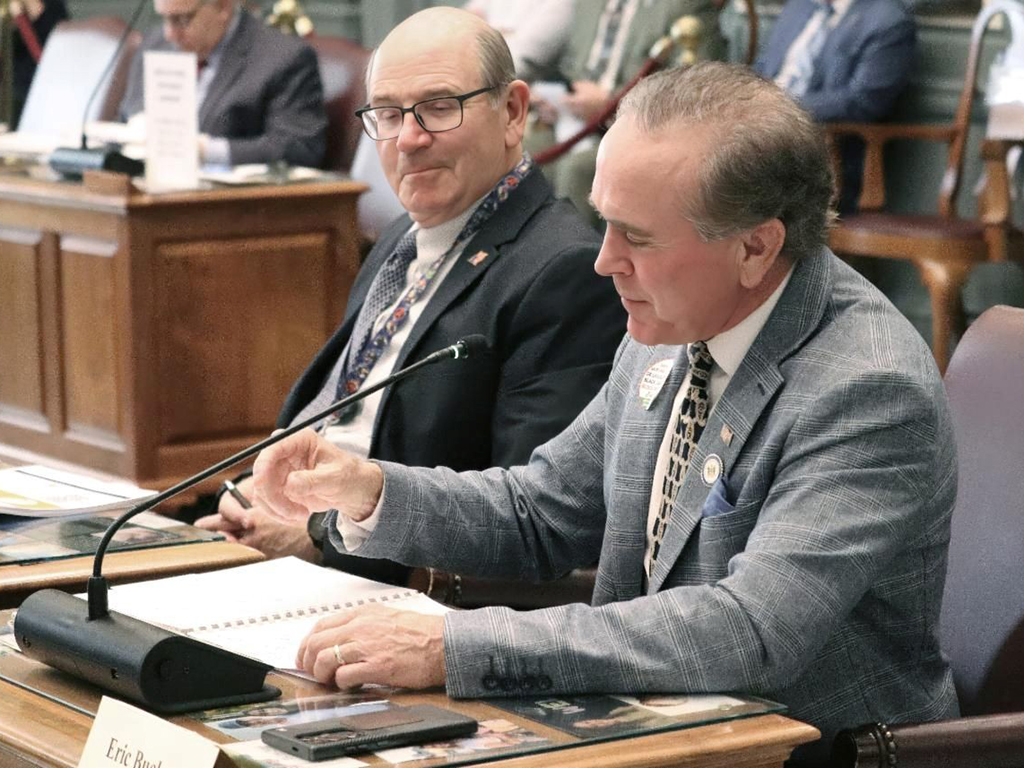
A new measure pending action in the State Senate seeks to reform Delaware’s parentage law by giving people conceived with donated sperm or eggs access to medical information and the identity of their donors.
Under Senate Bill 236, sponsored by State Sen. Dave Lawson (R–Marydel) and House Republican Leader Tim Dukes (R–Laurel), gamete banks and fertility clinics would be required to collect and maintain identifying information and nonidentifying medical history from gamete donors. Upon request, nonidentifying medical history must be made available to parents at any time. Additionally, upon turning 18, people conceived with donated genetic material would be able to access their medical histories and information identifying their donors.
Sen. Lawson said his bill reflects the growing use of assisted reproductive technology and the need for clarity in state law.
“As more families rely on assisted reproduction, it is critical that we provide a clear, consistent legal framework that respects both parents and children,” Sen. Lawson said. “This legislation makes clear that individuals conceived through these methods can obtain important medical history and, as adults, identifying information about their donor. That knowledge can be essential for medical, personal, and family reasons.”
The bill adopts portions of the 2017 updates to the Uniform Parentage Act, a model law developed to help states address evolving issues related to assisted reproduction in a consistent manner.
“This is a transparency issue at the most fundamental level,” Rep. Dukes said. “In an era where consumer testing like 23 and Me and AncestryDNA has become commonplace, we need to recognize that anonymous donations have already largely become a thing of the past. SB 236 is part of a growing ethical consensus that individuals conceived with donated genetic material have a right to know about the most personal information there is – the data encoded into every cell of their bodies.”
According to federal data, approximately 1.6% of babies born in the United States each year are conceived using assisted reproductive technology, a number that continues to grow.
The bill awaits the consideration of the Senate Health & Social Services Committee.