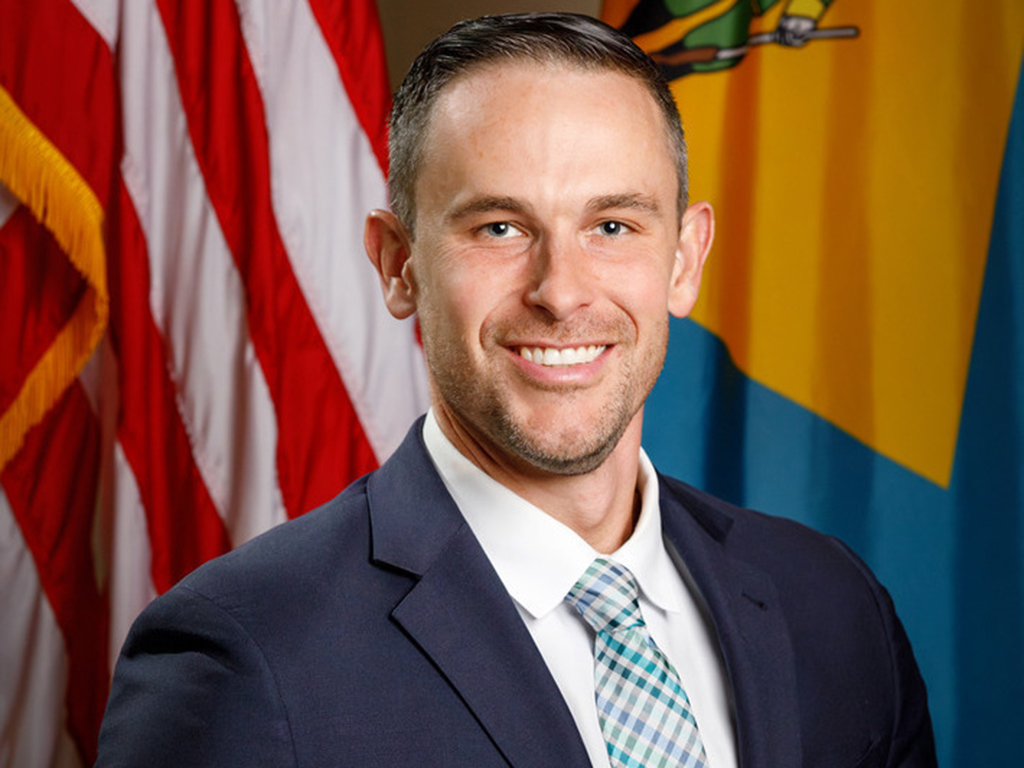
Democratic lawmakers, Sen. Ray Seigfried and Rep. Mara Gorman, filed legislation this week to discourage the Delaware River and Bay Authority (DRBA) from engaging in business relationships with companies contracting with U.S. Immigration and Customs Enforcement (ICE) to deport foreign nationals not complying with immigration laws.
In recent months, Avelo Airlines, a commercial airline that serves Wilmington Airport, has contracted with ICE to operate charter flights to transport detainees.
“While it’s true that much of immigration policy is a federal matter, there are levers we can pull here at the state level,” Sen. Seigfried said. “Withholding the fuel tax exemption from companies that are knowingly deporting people without due process is one way that we can make these corporations pay for their complicity.”
The DRBA was established through a compact more than 60 years ago as an independent authority to maintain transportation links between Delaware and New Jersey, operate regional airports, and engage in economic development. In addition to Wilmington Airport, the DRBA manages, finances, and operates the Cape May-Lewes Ferry and the Delaware Memorial Bridge. It does not answer to the Delaware state government.
The first of the two proposals filed this week, Senate Concurrent Resolution 123, urges the DRBA to prohibit the granting of any incentives to businesses in contractual relationships with ICE that facilitate the deportation of individuals who have not been afforded sufficient due process protections.
The two lawmakers have also introduced Senate Bill 207, which seeks to amend two sections of the Delaware Code:
- One provision of the bill would prohibit the Department of Transportation from contracting with airlines or transportation providers for the use of state-owned airport facilities if they knowingly transport individuals detained by U.S. Immigration and Customs Enforcement (ICE) for deportation without a valid judicial warrant or demonstration of due process.
- The second provision would disqualify commercial airlines from receiving an exemption from the state’s five-cent-per-gallon tax on aviation fuel (granted as an economic development incentive) if the airline transports ICE detainees for deportation without meeting the same standards for judicial warrants and due process.
Critics of SB 207 note that it places Avelo officials in the nearly impossible situation of policing a federal government agency. They also observe that Wilmington Airport has had difficulty attracting and retaining commercial airline service. Frontier Airlines operated there from 2013 to 2015, and again from 2021 to 2022. Several other carriers have also failed over the last 20 years in their attempts to provide continuing service.
Avelo Airlines operates in the ultra-low-cost carrier (ULCC) segment of the industry, with very thin profit margins. The value of the ICE contracts and the state fuel tax exclusion are economic considerations its executives cannot easily disregard. Should SB 207 become law, the airline may be forced to choose between maintaining its federal contracts or abandoning its service to Wilmington.
House and Senate Democrats controlling the 153rd Delaware General Assembly have actively sought to deter cooperation between state and local governments and U.S. Immigration and Customs Enforcement. Earlier this year, a law was enacted to ban Delaware law enforcement agencies from entering into agreements with ICE to aid in the arrest or detainment of illegal immigrants. Another pending bill seeks to restrict Delaware police agencies from cooperating with federal agencies conducting immigration enforcement at churches, schools, or healthcare facilities without permission from the Attorney General.