Delaware House Republicans

Confusion Over Solicitation and Political Canvassing Creates Friction, Conflict

September 25, 2026
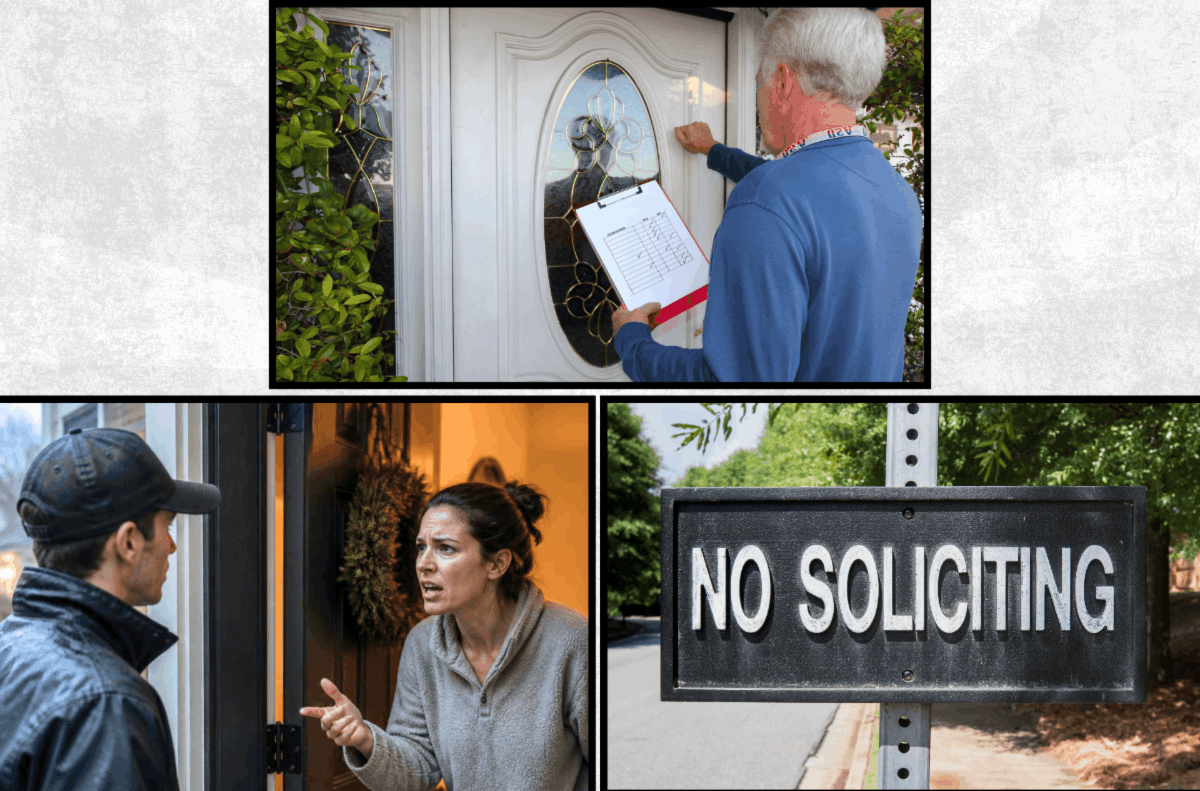
Collage of three scenes of individuals knocking at a homeowner's doors depicting political canvassing rights is not the same as soliciting.

With less than six weeks remaining until Election Day, political candidates and their supporters throughout Delaware are actively campaigning, leading to more complaints and confrontations over confusion between solicitation and canvassing.

Decades of case law have established Americans’ right to advocate for political, religious, and non-profit causes door-to-door, even in privately owned communities.

Solicitation involves situations in which individuals go door-to-door to sell goods or services. By contrast, canvassing is a noncommercial exercise of free speech guaranteed by the First Amendment to the U.S. Constitution. In political canvassing, volunteers or candidates visit homes to share information, discuss public issues, register voters, or encourage people to vote. Canvassing for political, religious, and non-profit groups is a protected right. Noncommercial canvassers are legally entitled to go door-to-door, speak with residents, and distribute literature.

Federal court cases over more than sixty years have affirmed and framed these rights, striking down state and local attempts to prohibit or unreasonably restrict such activities.

In Lovell v. City of Griffin (1938), the Supreme Court of the United States (SCOTUS) found that a city ordinance requiring a permit to distribute “circulars, handbooks, advertising, or literature of any kind” was unconstitutional. The ruling established a precedent for broadly allowing canvassing and the distribution of flyers, declaring it a form of protected speech.

In Martin v. City of Struthers (1943), the Supreme Court found unconstitutional a municipal ordinance that barred anyone from contacting citizens in their homes to distribute handbills or circulars. Delivering the prevailing opinion, Justice Hugo Black noted that the ability to distribute information to every citizen was “so clearly vital to the preservation of a free society that…it must be fully preserved.”

Generally, constitutional freedoms cannot be suspended inside privately owned communities.

In Marsh v. Alabama (1946), the High Court considered a case in which religious materials were being distributed in Chickasaw, a town exclusively owned by a corporation. Company officials posted the notice stating: “This Is Private Property, and Without Written Permission, No Street, or House Vendor, Agent or Solicitation of Any Kind Will Be Permitted.”

A woman handing out literature for the Jehovah’s Witnesses was later arrested when she refused to comply with the declaration. In this case, the justices found that even though the community was under exclusive private ownership, the owners could not arbitrarily curtail citizens’ constitutional rights. “Ownership does not always mean absolute dominion,” the court’s prevailing opinion stated. “When we balance the Constitutional rights of owners of property against those of the people to enjoy freedom of press and religion, as we must here, we remain mindful of the fact that the latter occupy a preferred position.”

Political canvassers cannot be required to obtain a license, pay a fee, wear an identification card, be subject to a criminal background check, or get permission from any municipality or homeowners association –- all rights affirmed in decisions made in the decisions of: Murdock v. Pennsylvania (1943); Watchtower Bible & Tract Society of New York, Inc. v. Village of Stratton (2002); and Lovell v. City of Griffin (1938).

While political canvassing is legally protected and cannot be prohibited by state law, municipal ordinance, or most homeowners’ associations, it is not without limits.

Private, gated communities, whose roads are not open to public access, can bar canvassers from entering.

Within reason, restrictions can limit the hours during which political canvassing can occur, such as between 9 a.m. and 9 p.m.

Homeowners have the right to bar canvassers from their properties by posting “No Trespassing” or “No Canvassing” signs.

Canvassers must also leave the property immediately if the homeowner asks them to. Under Delaware law, people who knowingly violate the property owner’s wishes could be found guilty of criminal trespass in the second or third degree.

Recent Updates


Filter by Category

ELEPHANT’S GRAVEYARD (week 4)

A continuing feature: Looking at bills supported by House Republicans during the 153rd General Assembly that did not become law…but probably should have Bills Seeking to Increase Electricity Supply and Eliminate Needless Expenses Left to Die Several measures sponsored by […]

ELEPHANT’S GRAVEYARD (week 4)

Delaware’s Ghost Gun Law Found to be Unconstitutional

A week after Gov. Matt Meyer signed legislation intended to “clean up” Delaware’s ghost gun law, a federal court struck down the original statute as unconstitutional. Enacted in 2021, House Bill 125 generally sought to criminalize the distribution, possession, and […]

Delaware’s Ghost Gun Law Found to be Unconstitutional

Bill Prompted by Brutal Crime Signed Into Law

A violent assault and abduction of an elderly Seaford woman prompted legislation that was signed into law Wednesday morning during a ceremony in Gov. Matt Meyer’s Legislative Hall office. State Sens. Stephanie Hansen (D-Middletown) & Bryant Richardson (R-Seaford) and State […]

Bill Prompted by Brutal Crime Signed Into Law

Delaware’s Ghost Gun Law Found to be Unconstitutional

A week after Gov. Matt Meyer signed legislation intended to “clean up” Delaware’s ghost gun law, a federal court struck down the original statute as unconstitutional. Enacted in 2021, House Bill 125 generally sought to criminalize the distribution, possession, and […]

Delaware’s Ghost Gun Law Found to be Unconstitutional

Bill Prompted by Brutal Crime Signed Into Law

A violent assault and abduction of an elderly Seaford woman prompted legislation that was signed into law Wednesday morning during a ceremony in Gov. Matt Meyer’s Legislative Hall office. State Sens. Stephanie Hansen (D-Middletown) & Bryant Richardson (R-Seaford) and State […]

Bill Prompted by Brutal Crime Signed Into Law

New Law Expands Hunting Opportunities in Delaware

The Statute Also Broadens Ammunition Allowed for Deer Hunting For Immediate Release: June 17, 2026 For More Information: Joseph Fulgham, 302-744-4184 A bill recently signed into law by Gov. Matt Meyer expands hunting in the First State by removing restrictions […]

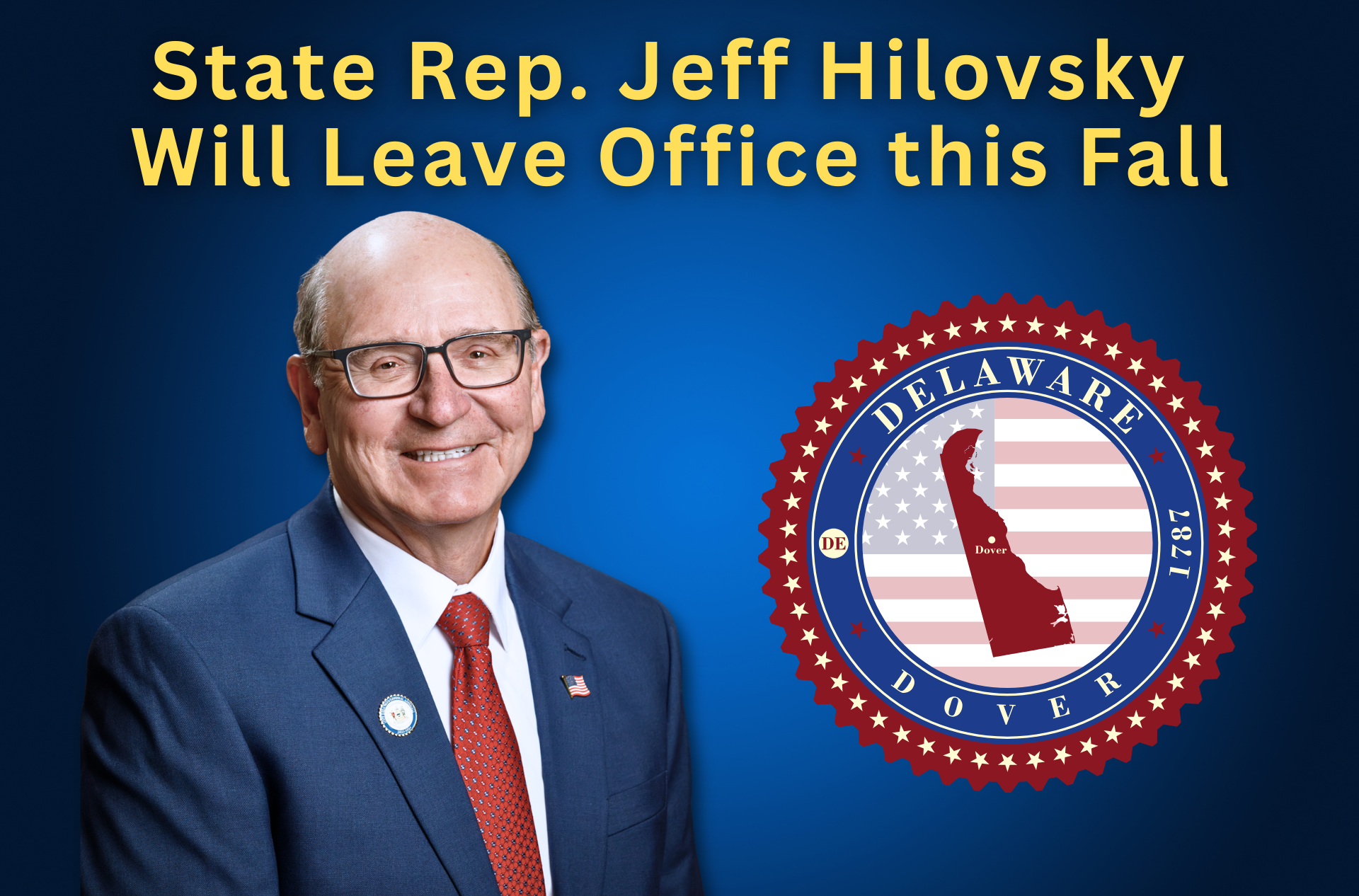
State Rep. Jeff Hilovsky Not Seeking Reelection

For Immediate Release: Thursday, May 7, 2026For More Information: Joseph Fulgham, 302-744-4184 State Rep. Jeff Hilovsky (R-Long Neck, Oak Orchard) announced today that he will not seek reelection this fall. The two-term legislator said his decision was mainly motivated by […]

State Rep. Jeff Hilovsky Not Seeking Reelection

ELEPHANT’S GRAVEYARD (week 4)

A continuing feature: Looking at bills supported by House Republicans during the 153rd General Assembly that did not become law…but probably should have Bills Seeking to Increase Electricity Supply and Eliminate Needless Expenses Left to Die Several measures sponsored by […]

ELEPHANT’S GRAVEYARD (week 4)

— Zombies in the Hall —

A Continuing Opinion Feature Looking at Bills That Died in the 153rd General Assembly…But May Rise Again. “Skip the Stuff” Seems Likely to be Reanimated in New Session Earlier this month, New Jersey implemented its new Skip the Stuff law, […]

— Zombies in the Hall —

ELEPHANT’S GRAVEYARD (week 3)

A continuing feature: Looking at bills supported by House Republicans during the 153rd General Assembly that did not become law…but probably should have. Abolishing the Deterrent to Building More Healthcare Capacity In Delaware, state law requires healthcare providers to obtain […]

ELEPHANT’S GRAVEYARD (week 3)

Bill Prompted by Brutal Crime Signed Into Law

A violent assault and abduction of an elderly Seaford woman prompted legislation that was signed into law Wednesday morning during a ceremony in Gov. Matt Meyer’s Legislative Hall office. State Sens. Stephanie Hansen (D-Middletown) & Bryant Richardson (R-Seaford) and State […]

Bill Prompted by Brutal Crime Signed Into Law

Reflections on the Session Past

State Reps. Danny Short and Tim Dukes reflect on the past Session by briefly answer three questions about the recently concluded 2026 legislative session: Watch the video here. […]

Reflections on the Session Past